





T-shirt Manufacturers business
The T-shirt manufacturing business is one of the most profitable and scalable segments in the global apparel industry. With rising demand for casual wear, corporate branding, promotional merchandise, and fashion startups, T-shirt manufacturing has become a strong business opportunity for entrepreneurs worldwide. This industry combines textile production, printing technology, design creativity, and supply chain management to deliver customized garments for different markets.
Today, the T-shirt manufacturing business serves multiple sectors including retail fashion brands, e-commerce sellers, corporate companies, sports teams, schools, NGOs, and promotional agencies. The versatility of T-shirts makes them one of the most widely produced and consumed clothing items globally.
Understanding the Business Model
The T-shirt manufacturing business typically operates in three main models:
- Bulk Manufacturing Model – Producing large quantities for wholesalers and exporters
- Custom Printing Model – Producing personalized T-shirts for events and branding
- Private Label Model – Manufacturing for fashion brands that sell under their own name
Each model has its own profit structure, investment requirements, and market demand. Many manufacturers combine all three to maximize revenue streams.
Production Process
The T-shirt manufacturing process involves several key stages:
- Fabric sourcing (cotton, polyester, blends, organic fabrics)
- Cutting of fabric into required patterns
- Stitching and assembly using industrial sewing machines
- Printing or embroidery for branding and design
- Washing and finishing for softness and durability
- Quality inspection and packaging
Modern manufacturers use semi-automated and fully automated machines to improve production speed and maintain consistency in quality.
Investment and Setup Requirements
Starting a T-shirt manufacturing business can range from small-scale setups to large industrial factories.
- Small scale setup: Basic stitching machines, printing setup, and small workforce
- Medium scale unit: Advanced stitching lines, screen printing, and cutting machines
- Large scale factory: Fully automated production lines, export-grade machinery, and integrated supply chain
Initial investment depends on scale, but even small businesses can start with relatively low capital compared to other manufacturing industries.
Customization and Printing Opportunities
Customization is a major growth driver in the T-shirt business. Customers demand unique designs, logos, slogans, and branding. Manufacturers use different printing methods such as:
- Screen printing (cost-effective for bulk orders)
- Digital printing / DTG (high-detail designs)
- Sublimation printing (sportswear and polyester fabrics)
- Embroidery (premium branding)
- Heat transfer printing (small batch production)
This flexibility allows manufacturers to serve both mass markets and niche fashion brands.
Profit Margins and Revenue Potential
The T-shirt manufacturing business offers attractive profit margins, especially in bulk and private label segments. Profit depends on factors such as fabric cost, production efficiency, order volume, and branding value.
- Bulk manufacturing: Lower margin but high volume
- Custom printing: Medium to high margin
- Private label production: Highest margin due to branding value
E-commerce growth has further increased demand, allowing manufacturers to sell directly to consumers or supply online sellers.
Market Demand and Growth Opportunities
The global demand for T-shirts continues to grow due to:
- Rise of casual and streetwear fashion
- Growth of online clothing brands
- Corporate branding and promotional campaigns
- Sports and fitness apparel expansion
- Festival and event merchandise demand
Emerging markets and digital platforms like Shopify, Amazon, and Instagram-based brands have significantly boosted the industry.
Challenges in the Business
Despite strong opportunities, the business also has challenges such as:
- Raw material price fluctuations
- High competition in low-cost markets
- Quality control management
- Fast-changing fashion trends
- Supply chain delays
Successful manufacturers overcome these challenges through efficient production systems, strong supplier networks, and continuous innovation.

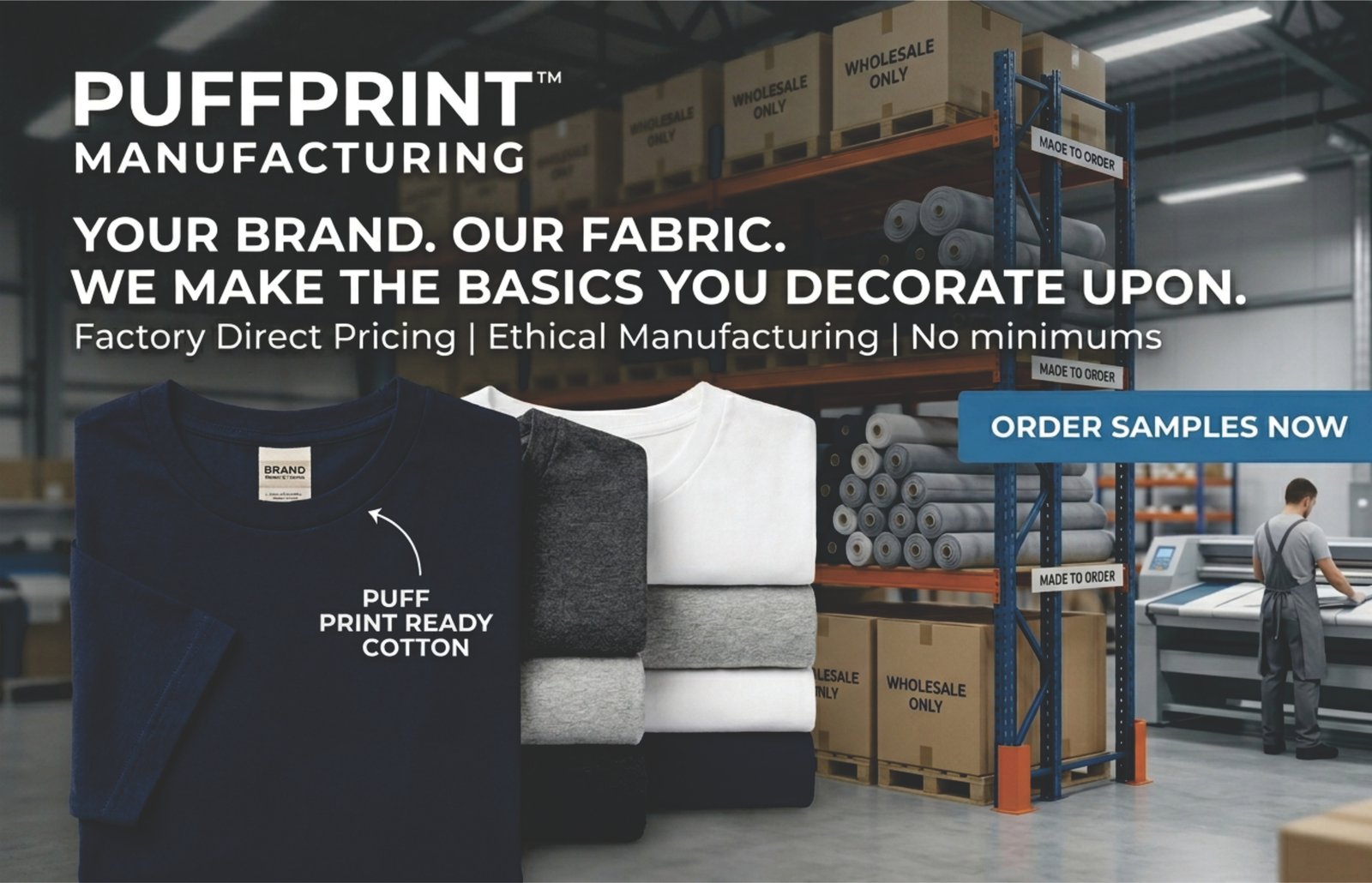
PuffPrint is your one-stop destination for high-quality custom apparel and personalized merchandise. From premium t-shirts, hoodies, and jackets to chef coats and aprons, we provide a wide range of products for individuals, businesses, and events. Our mission is to deliver top-notch printing solutions with a focus on quality, comfort, and style.
Whether you’re looking for bulk corporate orders, custom gifts, or unique designs for your wardrobe, PuffPrint combines creativity with superior manufacturing to bring your ideas to life. Explore our collection and experience hassle-free online ordering, fast shipping, and exceptional customer service at www.puffprint.com
Contact Info
- Address: Address - Damu Nagar, Akurli road, Kandivali East, Maharashtra - 400101
- Phone: +91 8418967244
- Email: puffprinting@gmail.com

